case study
2021 - 2022
Design System

Home Depot
Role: Project Lead, designer, workshop facilitator
Figma • Zeroheight • Miro
The Ask:
In 2021, I led a strategic evaluation to determine if Figma could unify our design stack. Our goal was to eliminate the friction caused by using Sketch, Invision, and Abstract simultaneously, creating a more cohesive environment for the UX team.
Following a successful 3-month evalutaion period, I spearheaded the transition for a Q1 2022 launch. I architected our new ecosystem from the ground up, developing a robust UI Kit, a scalable Component Library, and a standardized Master Template.
This didn't just replace old tools—it redefined our entire design-to-dev workflow.
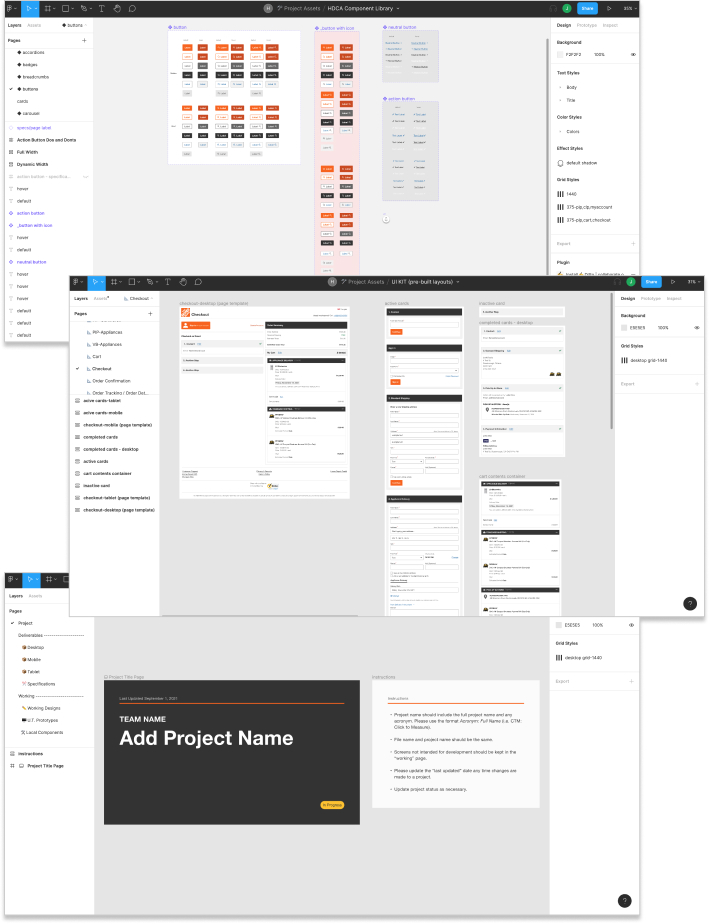
The next task was to ensure that the organization was adequately trained and prepared to make the transition to Figma.
We began by conducting a series of internally led workshops for designers covering:
- Figma Basics
- Advanced Figma & Prototyping
- Library usage & workflow
Once training was completed with the UX team, I conducted mini workshops for the product and development teams surrounding basic navigation, the inspect tool & commenting.
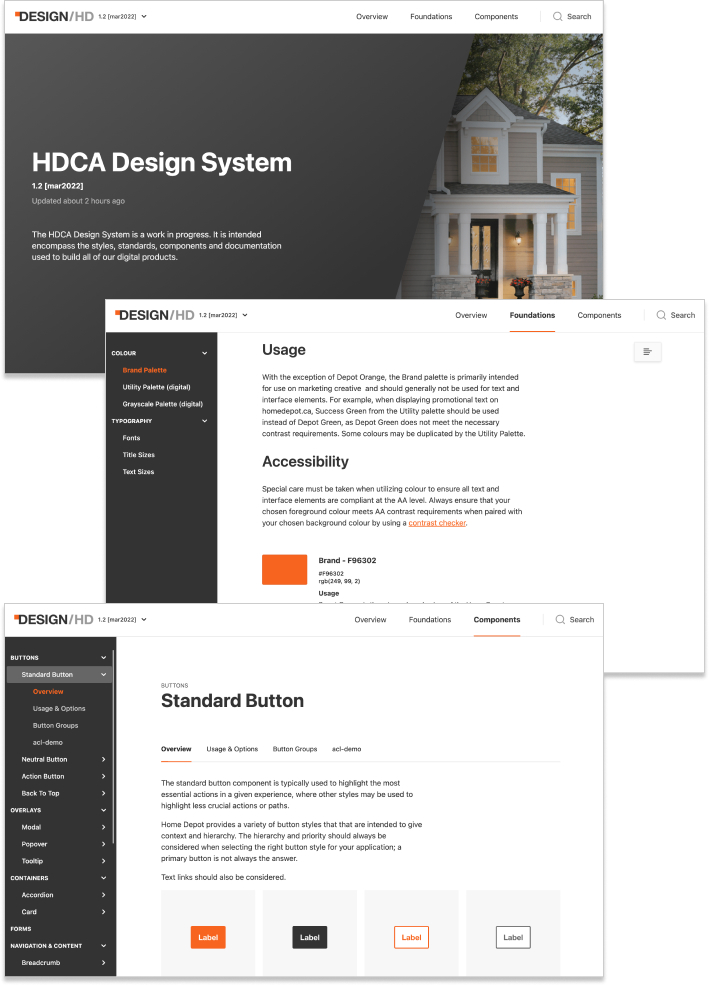
My final task was to create a usable design system to consolidate usage guidelines, angular, figma and documentation into a single source of truth and reference for our digital teams utiliziing ZeroHeight.
Single Source of Truth:
To bridge the gap between design and code, I consolidated our Angular storybook, Figma assets, and brand documentation into a centralized design system using zeroheight. This significantly reduced "guesswork", ensured consistency and provided a reference for our digital teams.
case study
2021 - 2022
Design System
Home Depot
Role: Project Lead, designer, workshop facilitator
Figma • Zeroheight • Miro
The Ask:
In 2021, I led a strategic evaluation to determine if Figma could unify our design stack. Our goal was to eliminate the friction caused by using Sketch, Invision, and Abstract simultaneously, creating a more cohesive environment for the UX team.
Following a successful 3-month evalutaion period, I spearheaded the transition for a Q1 2022 launch. I architected our new ecosystem from the ground up, developing a robust UI Kit, a scalable Component Library, and a standardized Master Template.
This didn't just replace old tools—it redefined our entire design-to-dev workflow.
The next task was to ensure that the organization was adequately trained and prepared to make the transition to Figma.
We began by conducting a series of internally led workshops for designers covering:
- Figma Basics
- Advanced Figma & Prototyping
- Library usage & workflow
Once training was completed with the UX team, I conducted mini workshops for the product and development teams surrounding basic navigation, the inspect tool & commenting.
My final task was to create a usable design system to consolidate usage guidelines, angular, figma and documentation into a single source of truth and reference for our digital teams utiliziing ZeroHeight.
Single Source of Truth:
To bridge the gap between design and code, I consolidated our Angular storybook, Figma assets, and brand documentation into a centralized design system using zeroheight. This significantly reduced "guesswork", ensured consistency and provided a reference for our digital teams.
case study
2021 - 2022
Design System
Home Depot
Role: Project Lead, designer, workshop facilitator
Figma • Zeroheight • Miro
The Ask:
In 2021, I led a strategic evaluation to determine if Figma could unify our design stack. Our goal was to eliminate the friction caused by using Sketch, Invision, and Abstract simultaneously, creating a more cohesive environment for the UX team.
Following a successful 3-month evalutaion period, I spearheaded the transition for a Q1 2022 launch. I architected our new ecosystem from the ground up, developing a robust UI Kit, a scalable Component Library, and a standardized Master Template.
This didn't just replace old tools—it redefined our entire design-to-dev workflow.
Transition:
The next task was to ensure that the organization was adequately trained and prepared to make the transition to Figma.
We began by conducting a series of internally led workshops for designers covering:
- Figma Basics
- Advanced Figma & Prototyping
- Library usage & workflow
Once training was completed with the UX team, I conducted mini workshops for the product and development teams surrounding basic navigation, the inspect tool & commenting.
My final task was to create a usable design system to consolidate usage guidelines, angular, figma and documentation into a single source of truth and reference for our digital teams utilizing ZeroHeight.
Single Source of Truth:
To bridge the gap between design and code, I consolidated our Angular storybook, Figma assets, and brand documentation into a centralized design system using zeroheight. This significantly reduced "guesswork", ensured consistency and provided a reference for our digital teams.